


Symptoms of the disease include red spots, patches, dryness, and severe itching on the skin, leading to a lot of discomfort in the arms, legs, groin area, hairline, nails, and even eye discomfort in severe cases.
Despite the intensive efforts of experts and scientists, the cause of the disease remains elusive.There are many different theories.Immunity supporters believe that the disease is caused by poor immunity.Research confirms that parents with psoriasis often have children with a similar disease.
Patients note that symptoms worsen after experiencing stress.Many people believe that metabolism, the function of the endocrine system, and other factors influence psoriasis.In this article, we'll take a closer look at the causes of psoriasis, available treatments, and its symptoms.
causes of psoriasis
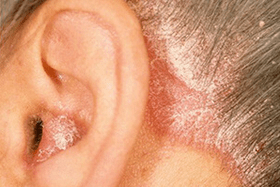
Scientists have not yet been able to reveal the main cause of psoriasis.Through experiments, studies and surveys we have discovered under what conditions and factors the disease is more likely to occur.However, not every factor has been found in all cases, so theories have been formed that have not yet been proven.
A dermatologist can tell you what psoriasis is and what its symptoms are, but today it is impossible to give an accurate answer to the question of what causes psoriasis and what medications will definitely help cure it.
Many patients note that the symptoms of psoriasis may worsen under stress and failure to comply with dietary rules; the disease is also more common in people with poor immunity, poor metabolism, and endocrine system disorders.But whether these factors actually affect the disease is unclear.
Let’s take a look at the following leading theories about the causes of psoriasis rash in children and adults:
- immunity
- genetics.
- Viral.
- endocrine.
- Neurogenic.
- Metabolic disorders.
A description of the symptoms of psoriasis and its types can be seen in the photo; the causes of the disease are as follows.
Immunology of psoriasis
This theory is considered one of the most proven and popular among experts.Therefore, its followers believe that the disease arises due to phenomena such as autoimmune attack.Let's look at how this happens.
Because the immune system is not working properly, it recognizes healthy cells as diseased cells and has destructive effects on them.Healthy cells become diseased, the affected area becomes inflamed, areas of peeling skin appear, and the cells die.Flaking is caused by:
- Friction of the affected area.
- Skin injuries of climatic nature: burns, hypothermia.
- Mechanical damage in the form of wounds, cuts, etc.
Examination of psoriasis-affected cells under a microscope revealed that antigen formation did occur, whereas in healthy areas antigen formation was absent.But this does not prove the immune theory of the emergence of psoriasis, because the cause of psoriasis is not yet known.Many scientists believe that immune factors alone are not sufficient to cause psoriasis symptoms.Immune factors often become the "start" of disease.
genetic theory
This theory can be proven through research, surveys, and statistics.Experts suggest that a person is at greater risk if his parents have a similar disease.The reason for this is genetic predisposition.Not only parents, but even more distant relatives may "inherit" the gene for the disease.
The findings showed that more than half of the patients had one or more people with a similar condition.Experts count and identify risks:
- If only one parent has psoriasis, the child's risk is one in four.
- If both the father and mother have psoriasis, the risk is much higher - 3 to 4.
However, we can also note from the results that patients may not have affected relatives.Therefore, genetic factors are not considered to be a major factor.This study confirms the theory that not one, but two or more factors contribute to the disease.Therefore, there is more than just genetic factors in the development of this disease.
virus theory
Many experts have long believed that viral infections can easily cause skin diseases.This hypothesis is related to the fact that in diseases that arise due to exposure to viral formation, the symptoms of psoriasis are exacerbated.It was noted that in some patients the first symptoms appeared during the illness.
Opponents of this theory offer a counterargument: This theory is directly related to the immune system, because when the body is damaged by viruses, the patient's immune defenses are greatly weakened, which is what causes the disease.This theory is also refuted by the fact that psoriasis is not contagious.The disease is not viral in nature because it is impossible to contract the disease from another patient.
endocrine theory
Proponents of the endocrine theory hypothesized that a failure in hormone production directly affects the development of psoriasis.They believe that the development of pathological cells is caused by hormonal imbalances.
This happens precisely because the endocrine system is disrupted.This includes the secretion of glands, excessive use of hormone-containing medications, pregnancy, and ovulation in women.Because hormonal levels change during pregnancy and ovulation, this may contribute to the onset of symptoms.The explanation for this theory is that hyperactive proliferation of cells in the body indicates disturbed regulation that is disrupted for endocrine reasons.
Based on a review of patient observations by physicians, it was found that symptoms worsened as the endocrine system became dysfunctional.But there is no proof or refutation of this theory because it is impossible to determine which hormone is produced that exacerbates symptoms.
neurogenic theory
Many patients themselves have confirmed this theory: they noticed that after experiencing stress and depression, not only did symptoms such as itching and rashes intensify, but many even showed signs of the disease for the first time.This is due to a disorder of the nervous system and is related to the patient's mind and body.
This theory has only recently emerged.Like other theories, it has not been studied.
According to this theory, the disease appears and progresses when:
- Stress and depression.
- experience.
- Insomnia.
- Severe fatigue and overwork.
During stressful situations, a person's blood vessels constrict, causing poor blood flow to the skin.Experts say it's because of this that symptoms of psoriasis may occur.Therefore, in the last century, doctors noticed the symptoms of this disease after experiencing it, according to patients.Therefore, this theory is based entirely on the patient's words.
Metabolic disorders
Dermatologists around the world have a hypothesis that psoriasis appears due to poor metabolism in patients.According to numerous studies conducted, these studies are based on tests carried out under laboratory conditions.Results for many patients showed similarities.
People with psoriasis experience slow metabolism and various metabolic disorders.This manifests itself in the form of a significant drop in body temperature, increased cholesterol levels, and various toxic substances that are not processed and eliminated by the body in a timely manner.
Lack of retinol, adermin, cyanocobalamin (vitamins A, B6, B12, respectively) in the blood - this is characteristic of the course of the disease.At the same time, ascorbic acid levels are also higher than normal.
Factors that trigger psoriasis
Research reveals which factors most commonly cause psoriasis to develop in people with the condition, under what conditions psoriasis is more likely to occur, and what makes symptoms worse.The following are the more common incidence factors.
infectious disease
Various diseases related to infections in the body can cause the symptoms and recurrence of psoriasis.They can also cause complications and cause serious illness.Therefore, if patients suffer from various infectious diseases during psoriasis, they should promptly eliminate the source, eliminate symptoms, cure the disease, and consult a doctor to prescribe medicine.
Pregnant
It has been observed that women are more susceptible to illness during pregnancy.This is due to hormonal changes, so the endocrine theory of psoriasis applies here.Therefore, pregnant women need to do more check-ups, receive examinations and consultations from doctors, monitor their overall health, try not to worry, follow proper nutrition or the diet prescribed by the doctor, do not drink or smoke, and it is best to sleep and wake up and eat at the same time.
Injuries and skin damage
Various skin injuries, such as wounds, burns, cuts, and scratches, carry a risk of developing psoriasis.This item covers chemical damage to the skin under the influence of various substances related to household and any other chemicals.Many patients work in factories and are frequently exposed to irritants—in such cases, the use of protective gloves or other methods is necessary.
bad habits
The disease may be caused by bad habits, including drinking and smoking.
using certain medications
Overdosing on various medications, such as antibiotics, immune boosters, and even vitamins, can worsen the symptoms of psoriasis.This is due to the immune theory of disease occurrence.
Malnutrition
It has been noticed that symptoms are more pronounced in people who do not follow the rules of proper nutrition than in those who eat correctly and monitor their diet.If you have psoriasis, you should not eat fried, spicy, salty, sweet or smoked foods.
psoriasis treatment
It is not recommended to self-select psoriasis medications as this can worsen the condition.Your treating dermatologist should diagnose the disease and prescribe the necessary treatment.Psoriasis is chronic and cannot be completely cured.The right medication can provide quick relief and long-term relief.
In addition to medication, you must follow a special diet for psoriasis.This will reduce oil production from the sebaceous glands.The diet does not include the intake of fatty, smoked, spicy, salty foods, alcohol and tobacco.Coffee and strong tea are prohibited.Medications that improve gastrointestinal function are also recommended.Thanks to the diet, metabolism is restored.
Doctors may also prescribe a multivitamin that includes vitamins D, B complex, A, and E.It is recommended to eat fish, olive oil and honey.
Prevent psoriasis
To prevent a recurrence of the disease or the first symptoms, you can take the following preventive measures:
- Don’t be stressed, anxious, depressed.
- Follow proper nutrition, give up bad habits and engage in light physical activity.
- Use a multivitamin.
- If there is disease, restore the function of internal organs.
- See your doctor more often.